


Vad är sömnrelaterade andningsstörningar? | Resmed Sverige
Vad är sömnrelaterade andningsstörningar?

Vad är sömnrelaterade andningsstörningar?

Sömnhälsa

Poor sleep poses serious risks to health and well-being. Sleep-disordered breathing (SDB) is an umbrella term for a number of sleep-related breathing disorders at night, including central sleep apnea (CSA), obstructive sleep apnea (OSA), and Cheyne-Stokes respiration (CSR). Here’s a quick guide to the types, risks, and treatment.

What are the different types of SDB?

We start with a glossary. In apnea , breathing stops completely for ten seconds or more. A hypopnea is similar to apnea, but breathing does not stop, but only decreases. An awakening occurs when the brain notices the lack of oxygen and starts the breathing process. It is these micro-awakenings that disrupt nighttime sleep and cause the poor sleep quality that characterizes SDB. The apnea-hypopnea index (AHI) indicates the number of disturbances per hour of sleep. People with severe sleep apnea can wake up over 30 times (micro-awakenings) per hour – no wonder they feel exhausted during the day!

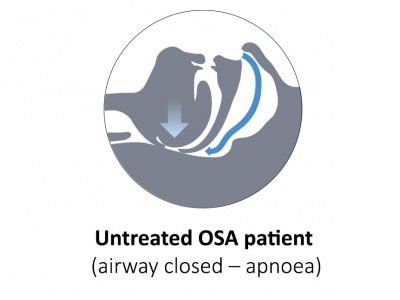
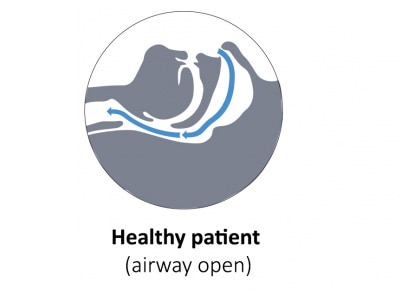
Obstructive sleep apnea (OSA) occurs when the muscles in the throat relax and block the upper airway during sleep. OSA is often accompanied by loud snoring or grunting, especially when awakening. Central sleep apnea (CSA) is much less common and occurs when the brain stops sending signals to the breathing muscles during sleep. The airway is not blocked, but breathing stops. In Cheyne-Stokes respiration (CSR), periods of shallow breathing are followed by deep breathing, with periodic central apneas.

 sdb-untreatedosapatient
 sdb-healthypatient

What are the risks?

It’s common knowledge that we can become cranky, forgetful and depressed the next day after a bad night’s sleep. However, untreated OSA is more than “one night of bad sleep”: it can have very serious consequences. It reduces quality of life and can lead to cardiovascular and metabolic diseases. For example, if you have untreated OSA, you are almost twice as likely to develop diabetes and cardiovascular disease1, three times as likely to die from cardiovascular-related problems2 and more than six times as likely to have a traffic accident3. Not to mention how loud, long-term snoring affects your partner and your relationship.

What treatments are available?

It is estimated that up to 80% of people with SDB are undiagnosed, which is very unfortunate because effective treatments are available .

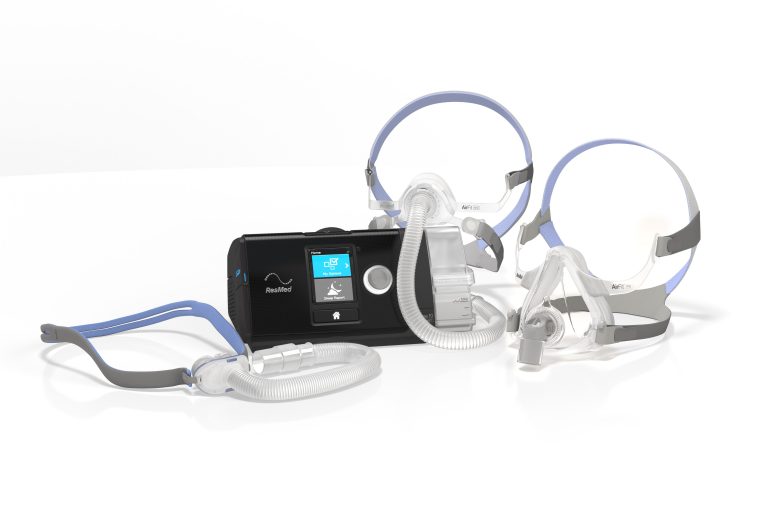
For many people, continuous positive airway pressure (CPAP) is the best option . This treatment provides gentle air pressure to keep the airways open. Advanced devices can identify and respond to OSA, CSA, and CSR, and there is a version for women that meets the specific needs of women with OSA.

 AutoSet_w_AirFitFamily-min

There are other solutions. For example, custom-made mouth guards, known as anti-apnea mouth guards, can restore normal breathing at night and improve sleep quality. Lifestyle changes can also help: for some people – but not all – OSA can be made worse by obesity, alcohol and smoking, or the use of sedatives.

If you suspect you have SDB, make an appointment with your doctor and get checked out. You can also take our test and bring the results with you to discuss with your doctor.

  • Greenberg et al. Gender differences in morbidity and health care utilization among adult obstructive sleep apnea patients, Sleep 2007. In this study the increased risk of diabetes and cardiovascular diseases is calculated specifically amongst women with sleep apnoea.
  • Campos-Rodriguez et al., Cardiovascular Mortality in Women With Obstructive Sleep Apnoea With or Without Continuous Positive Airway Pressure Treatment:
  • A Cohort Study, Annals of internal Medicine, 2012. In this study the increased risk of cardiovascular death is calculated specifically amongst women with sleep apnoea.